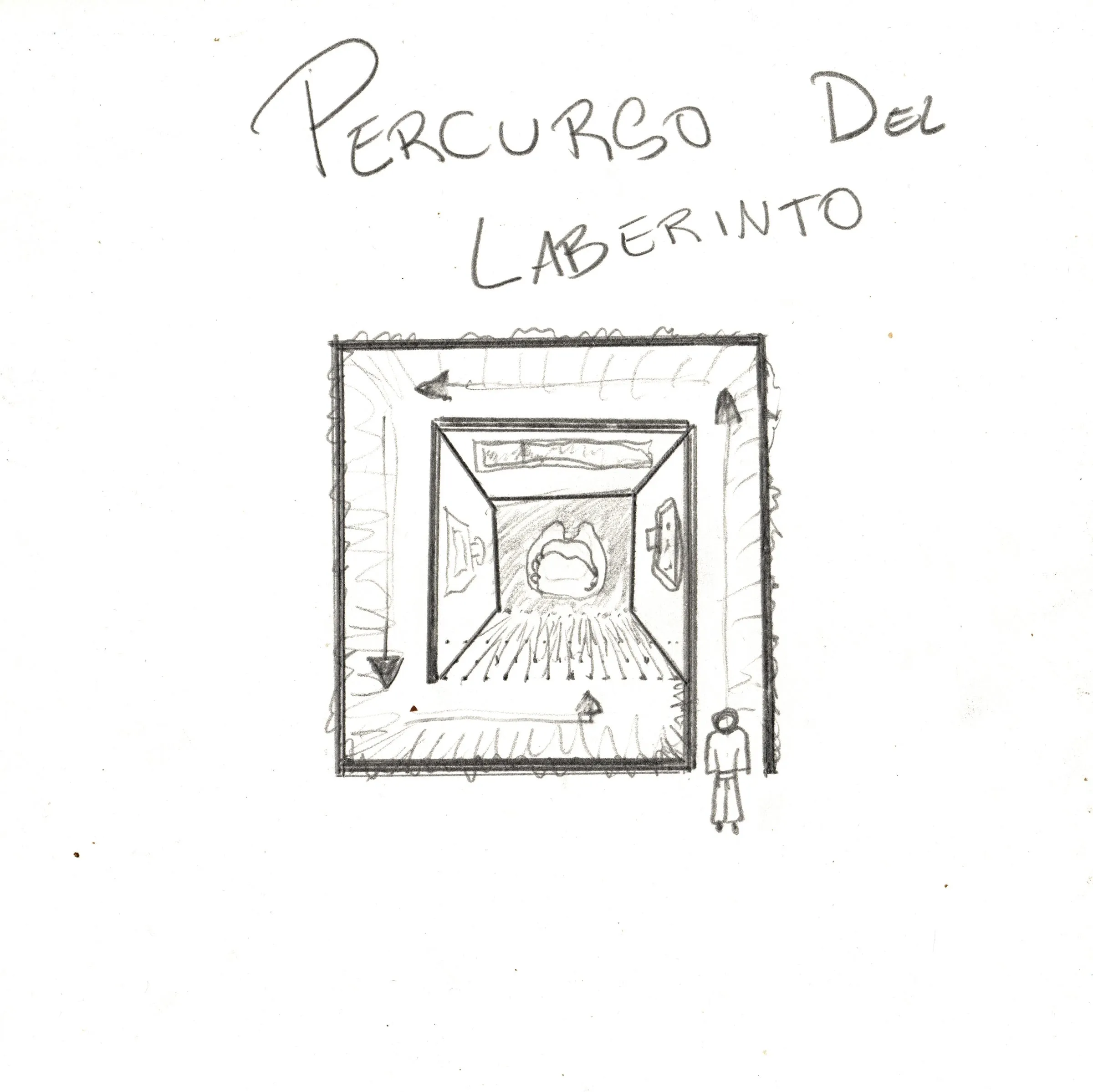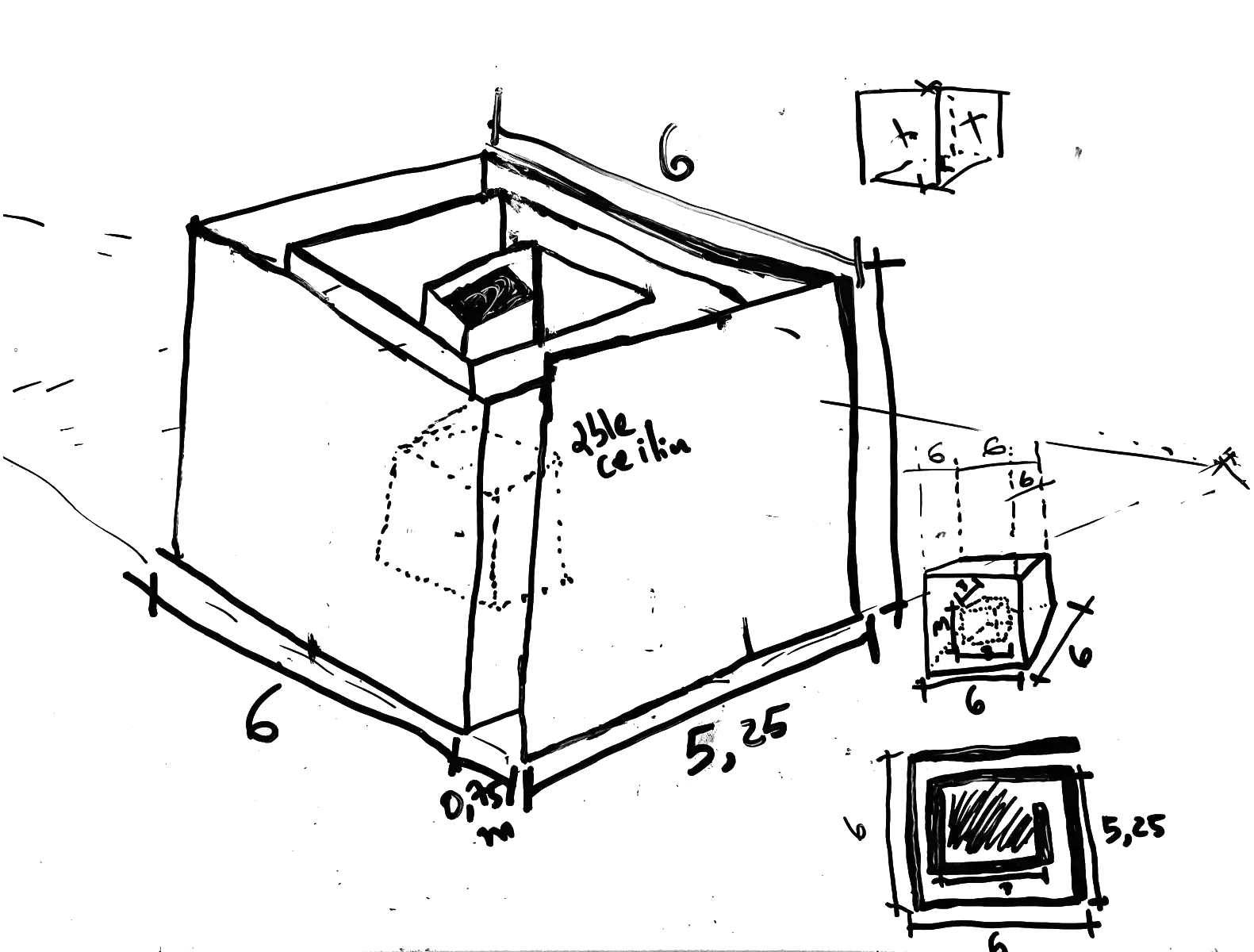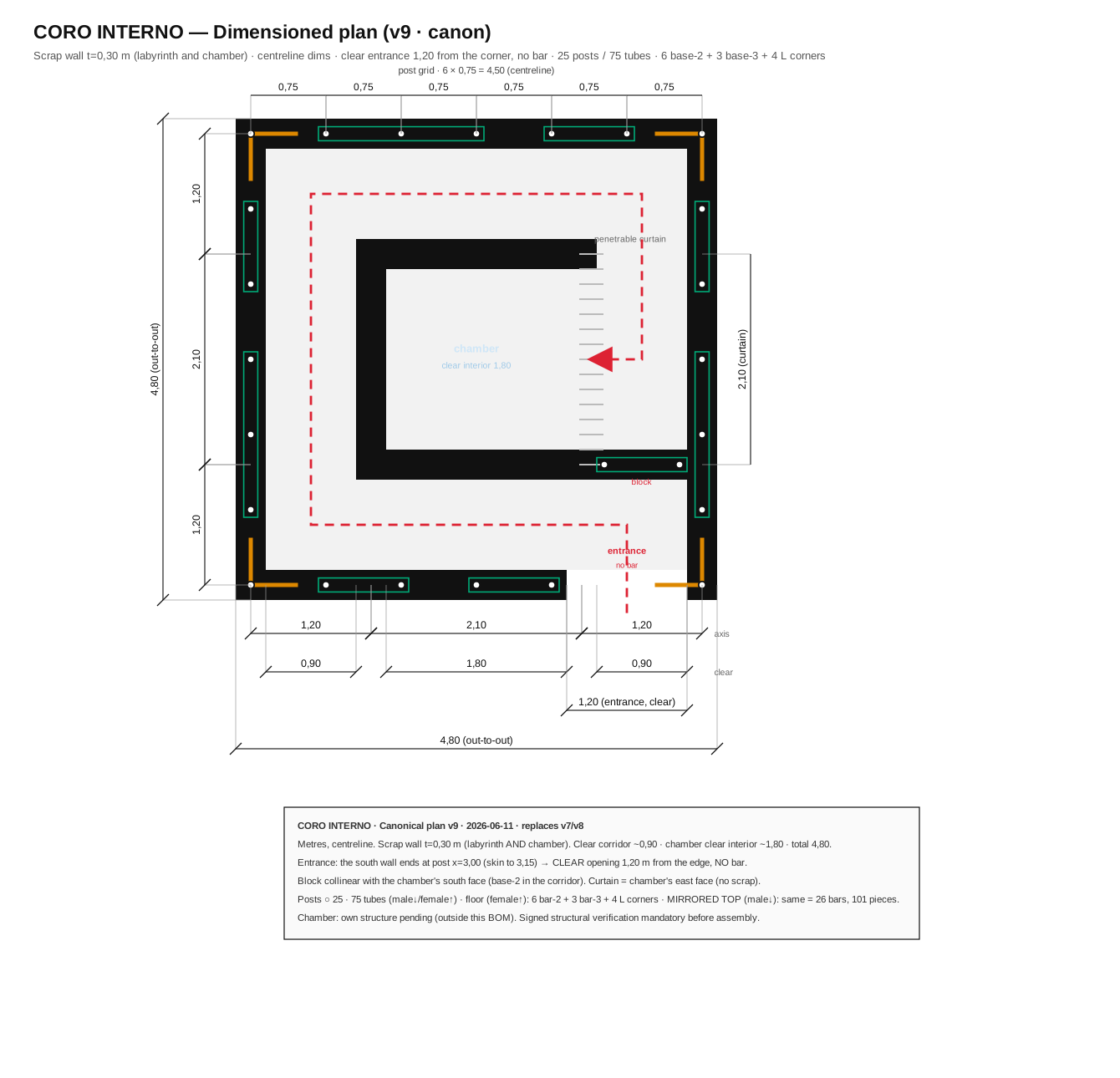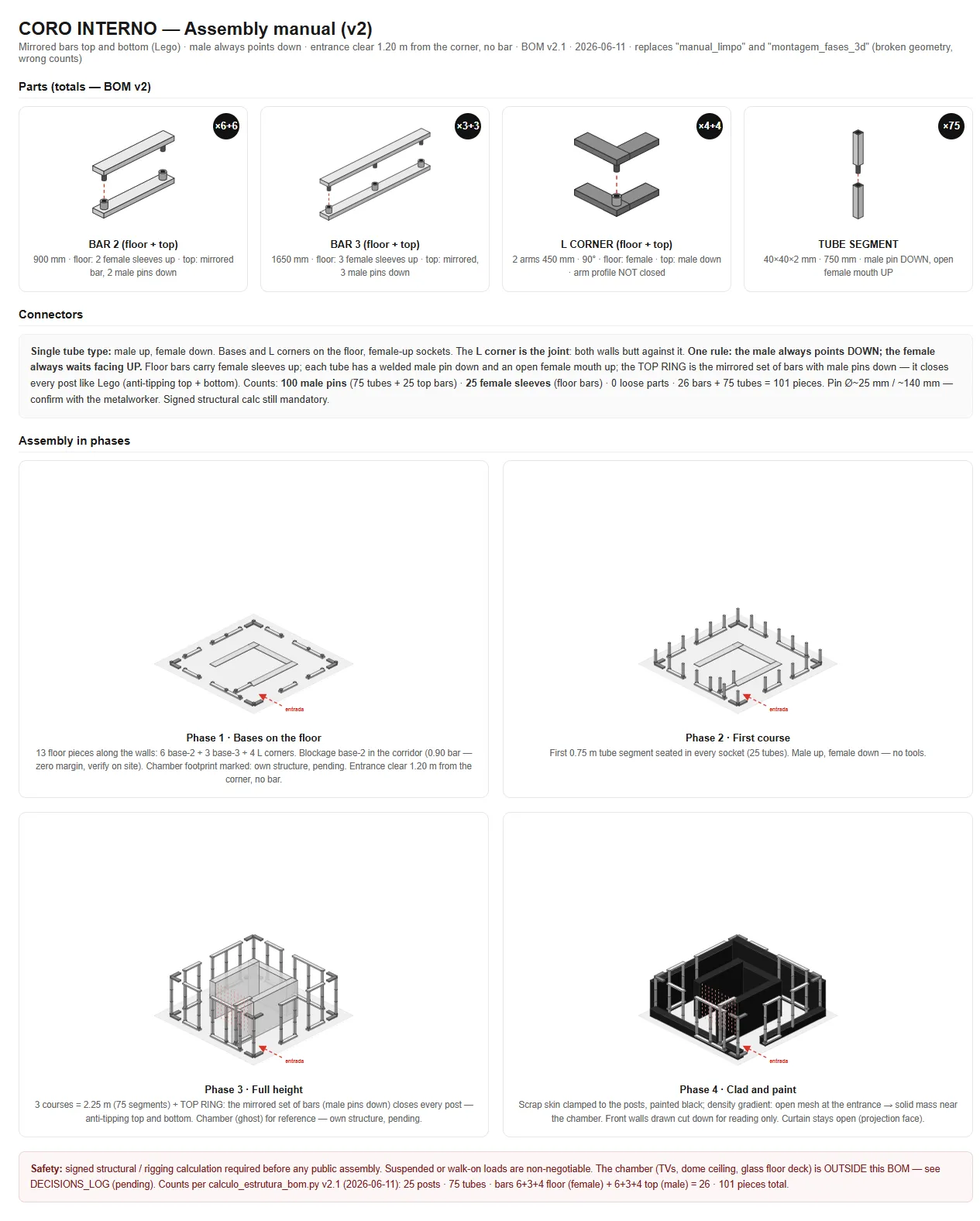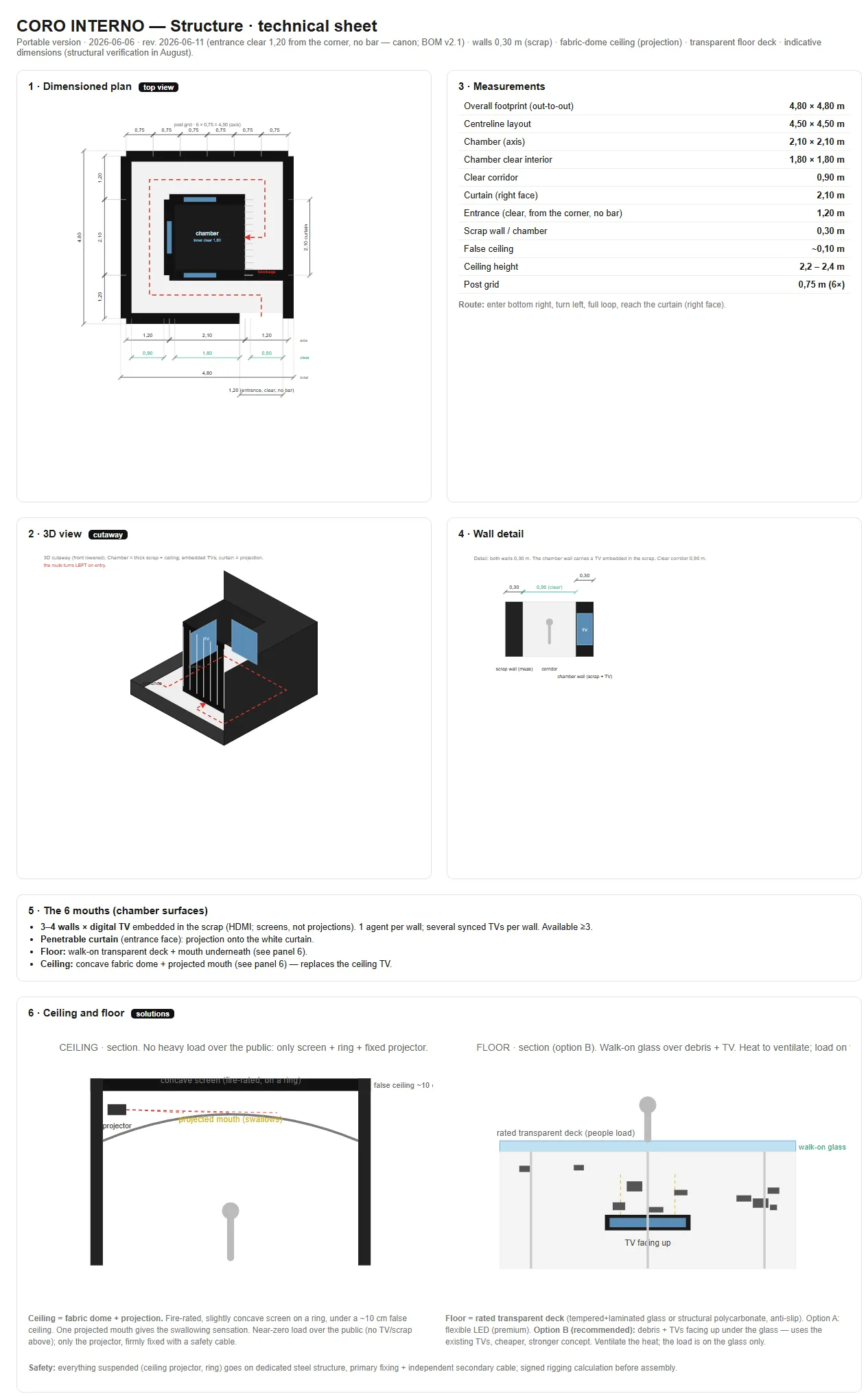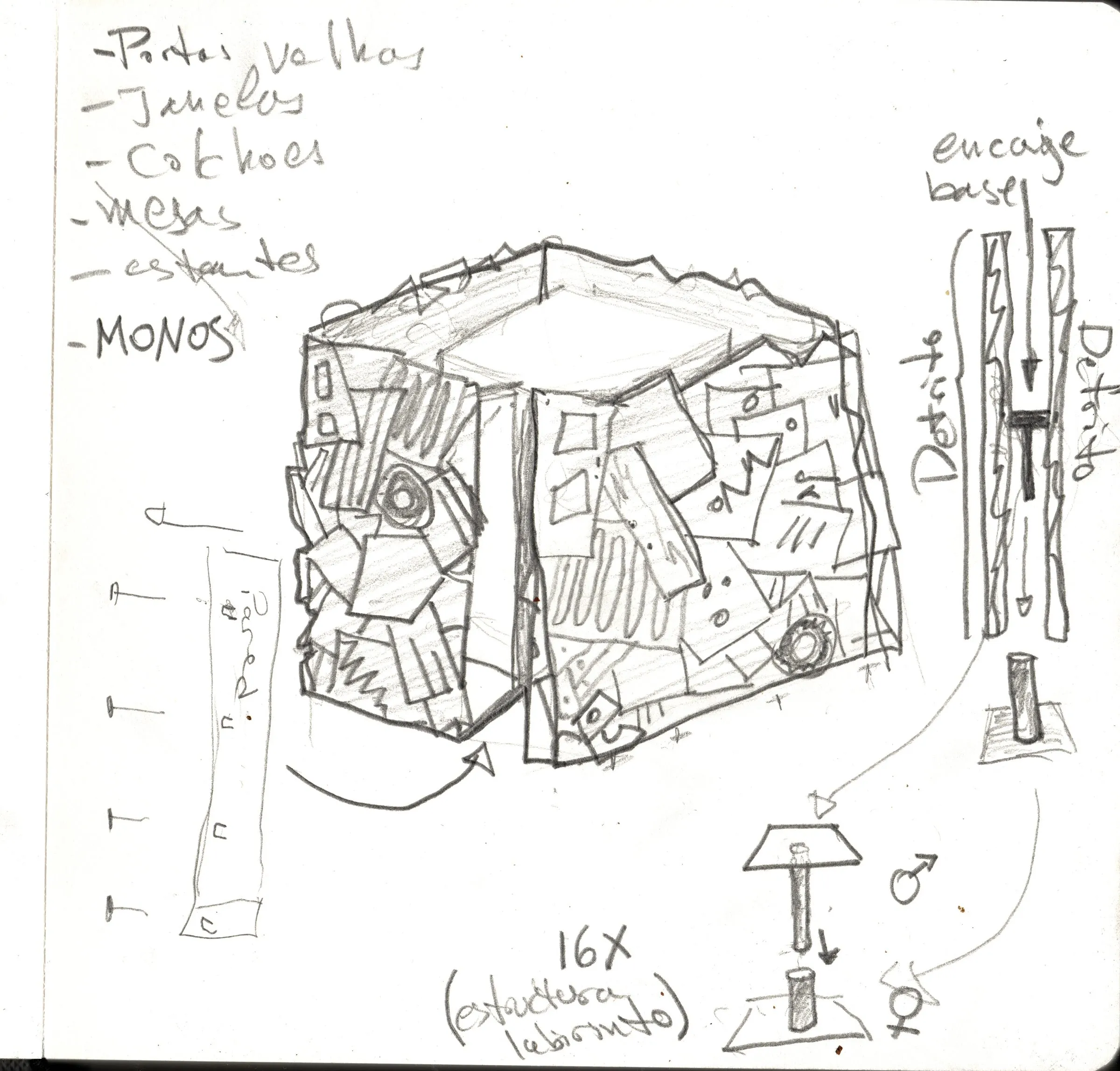
Coro Interno puts the visitor inside a fragmented mind in conflict. You enter through a labyrinth built from old objects, grates, doors, debris, all painted black, and walk it until you reach a tight inner chamber. Your presence triggers six AI agents, each with a different dysfunctional personality, all speaking with my cloned voice. One of them turns to you and offers a moment of attention. The others take it. The argument feeds on itself, and you stop being someone it talks to and become a hostage in a mind that is not yours.
The six inner surfaces of the chamber show the inside of six mouths. Between the teeth, like the bars of a cell, my own face, silent, pre-recorded. The floor is covered in debris.
The piece continues Internércia (2012) by turning inward. Where that work was the self exposed to the outside through the performance of online identity, this one goes into the system beneath it, the social network of the self. The labyrinth is made of discarded objects because the material is biography: migration, loss, the things you carry. Painting them black is mourning. You cross the mourning of past realities to reach the living core.
The scrap is gathered locally in each city and painted black on site, so every installation grieves its own discarded past. The one white surface in the whole black labyrinth is the threshold you push through to enter, a membrane in the lineage of Jesús Soto's Penetrables, the single Venezuelan thread tying the work back to where I am from.
In development. First visual documentation expected late 2026.