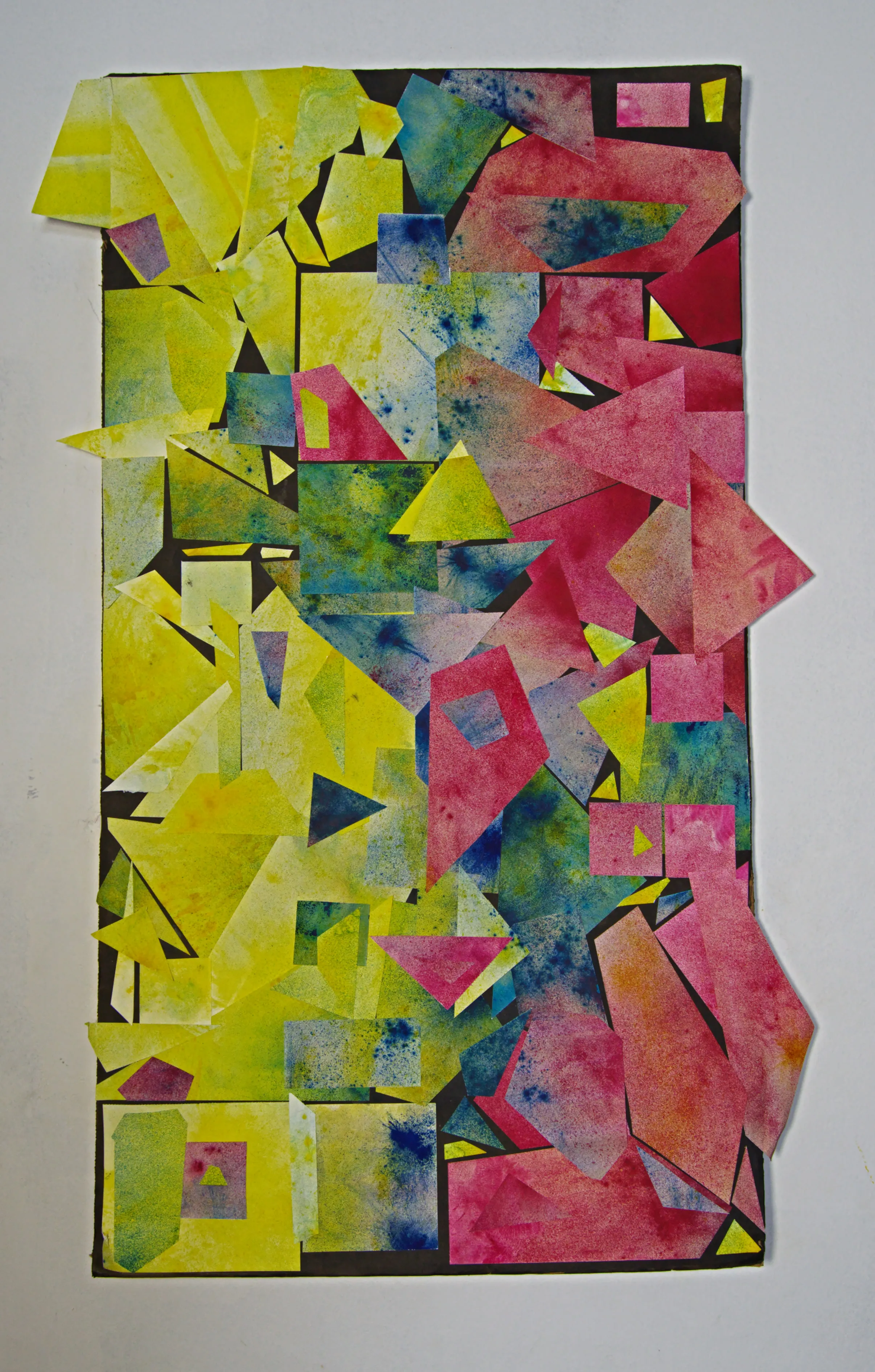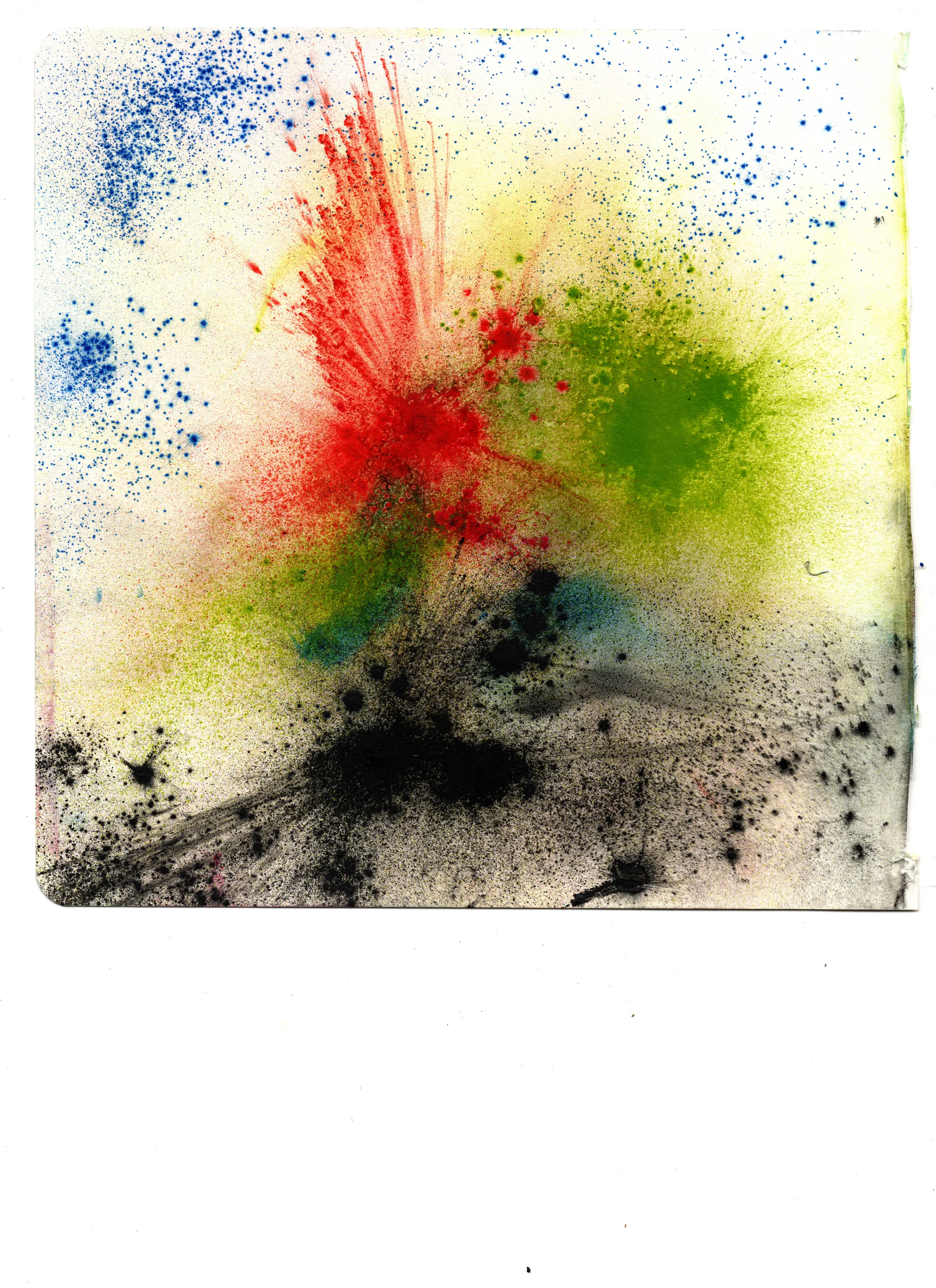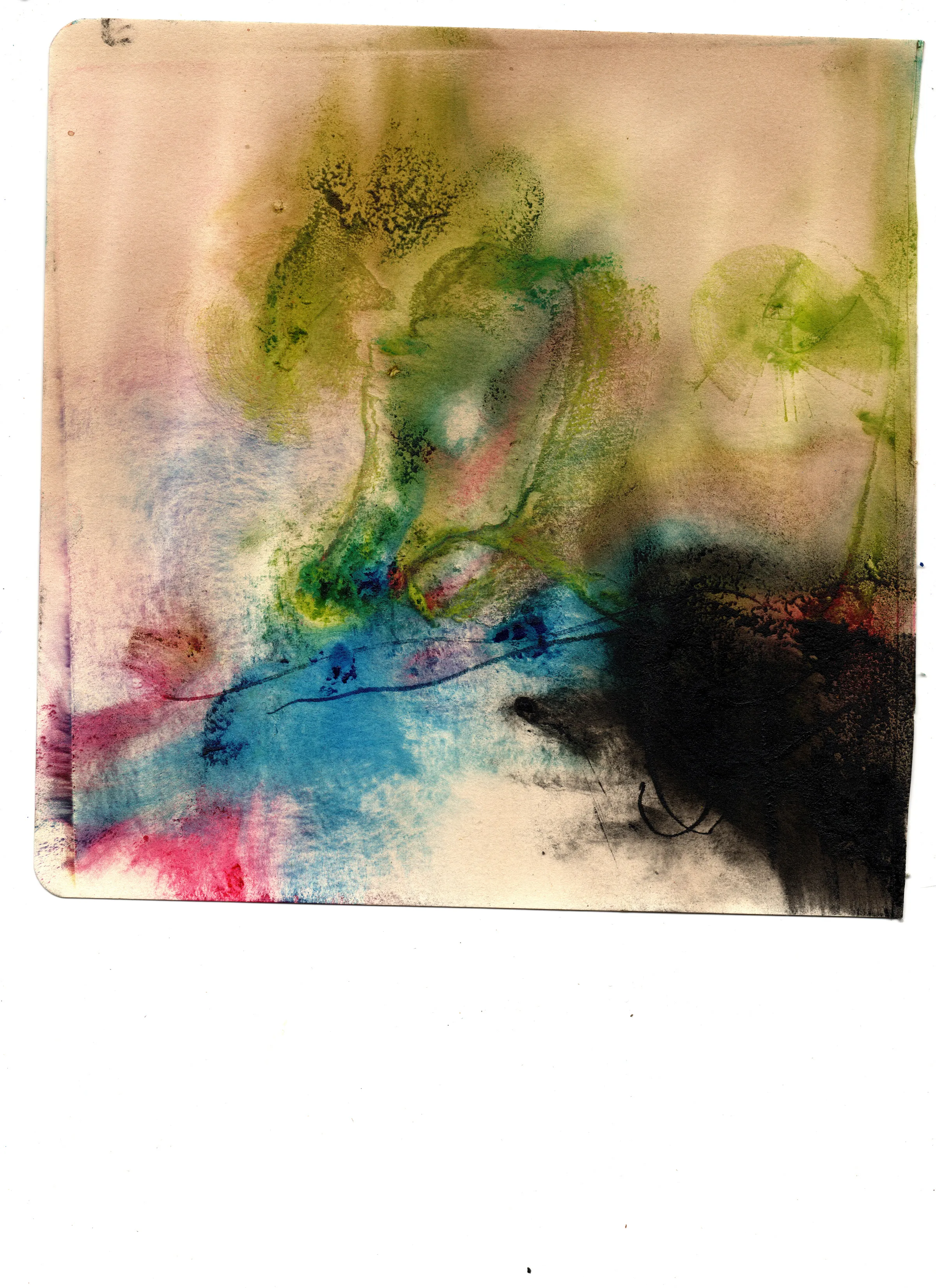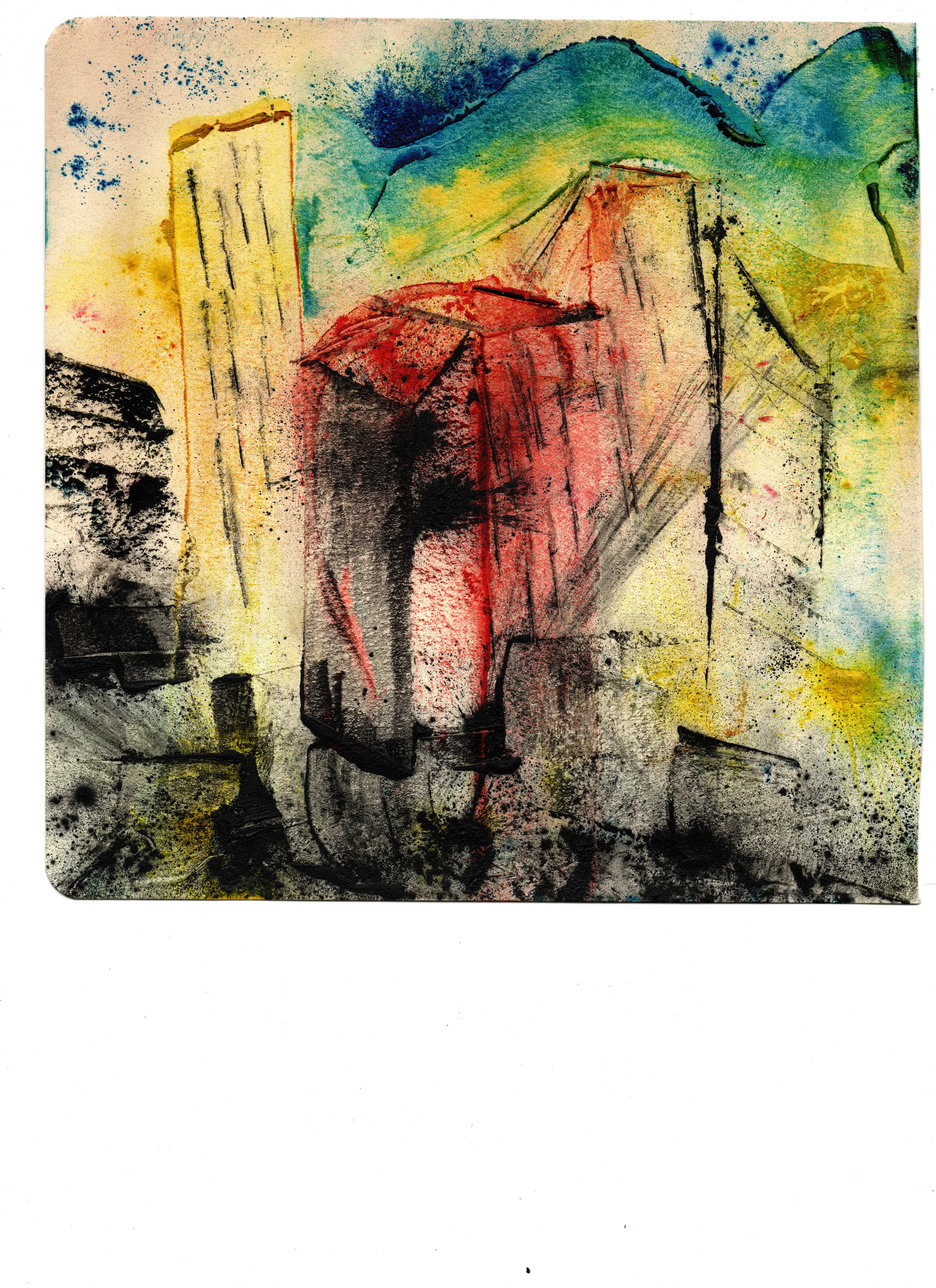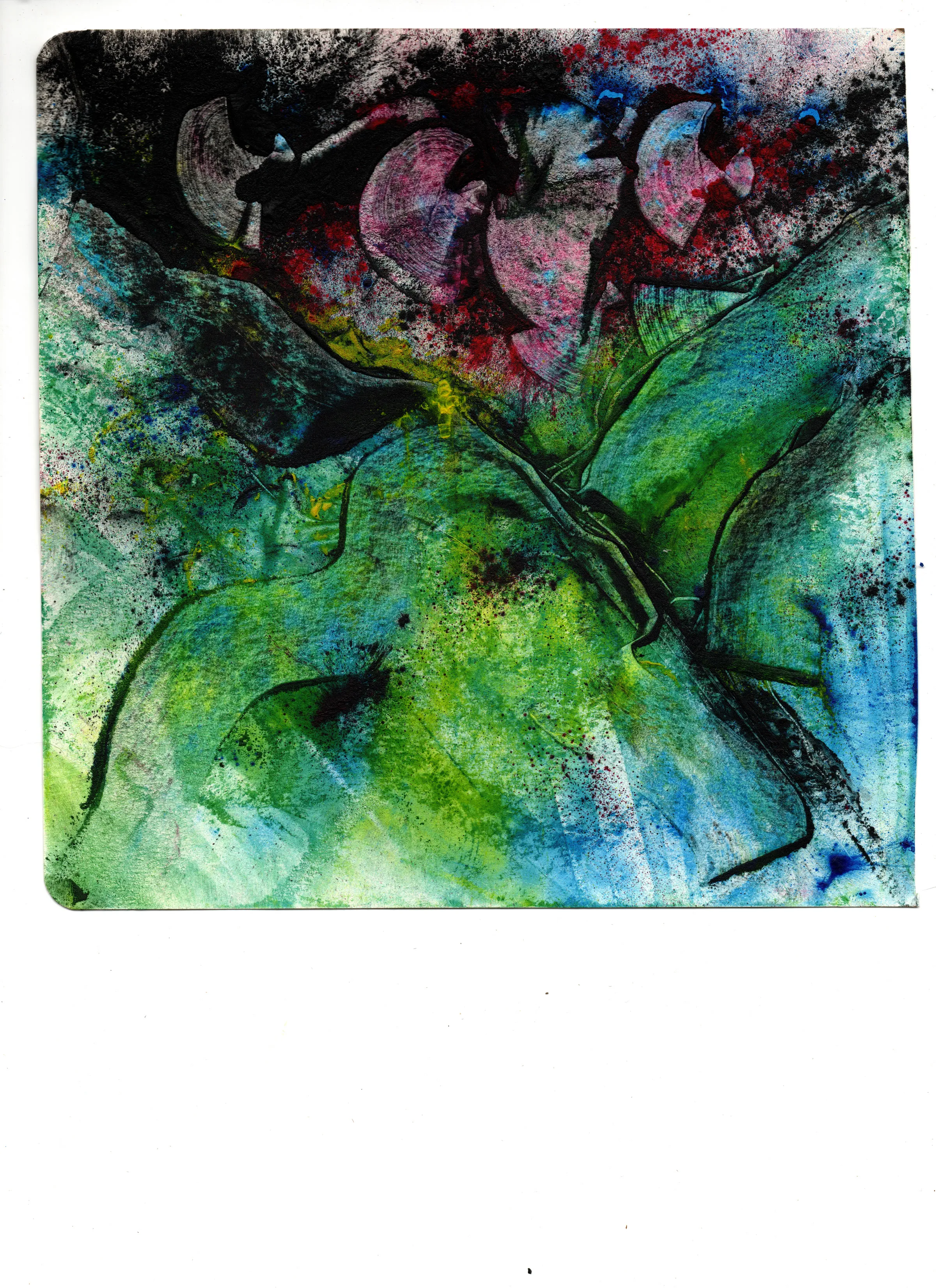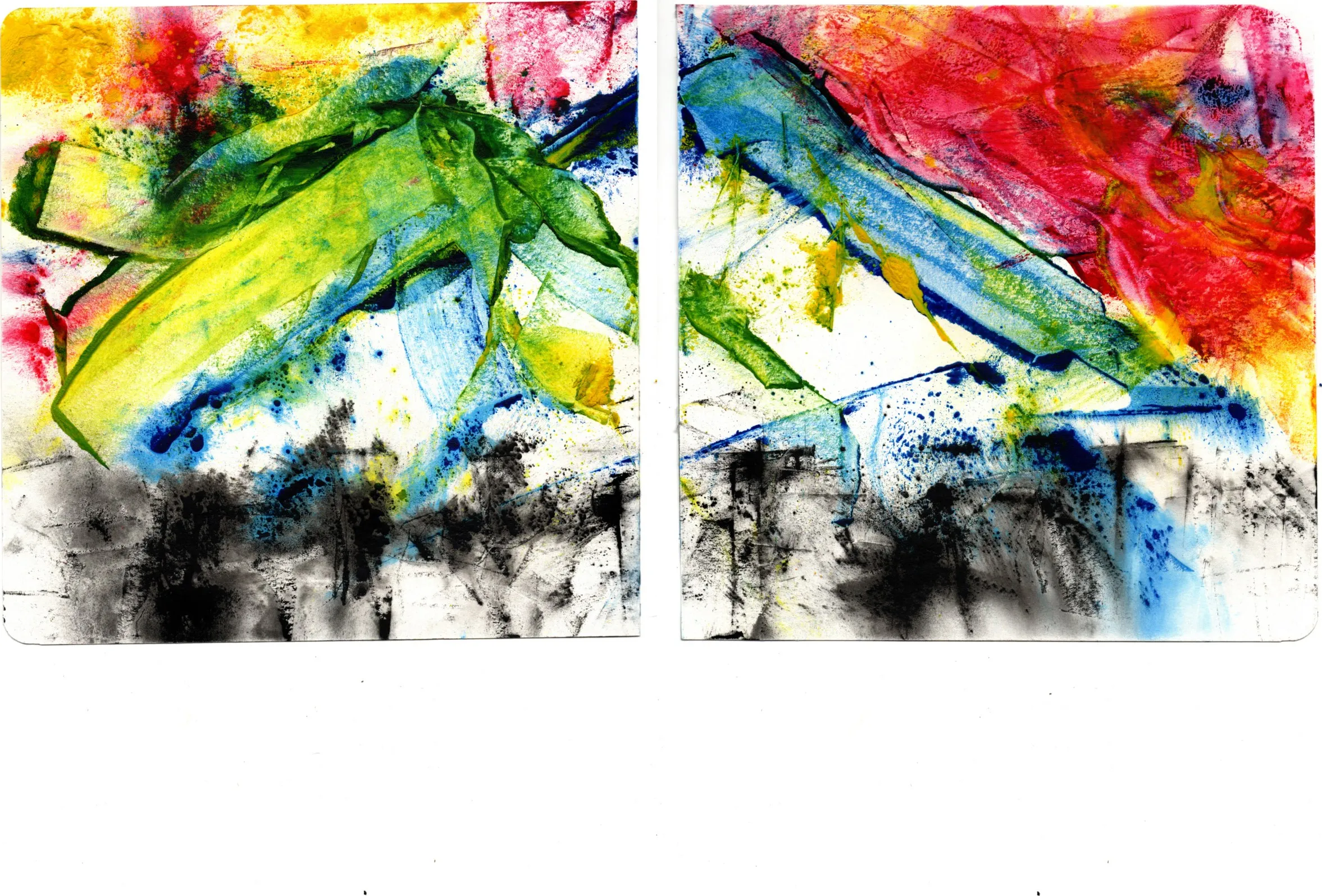
The series began with a piece I made for my mother. I had run toner across sheets, cut them into squares, and meant to rearrange the squares in a clean grid. I am bad at measuring and cutting straight, the cardboard I had bought was a yellowish white, and gaps opened between the tiles where that ground showed through. My mother loved the piece and pointed at the gaps. She said I do not have a surgeon's hand. I love that she said it, and I decided to use what I am bad at instead of hiding it.
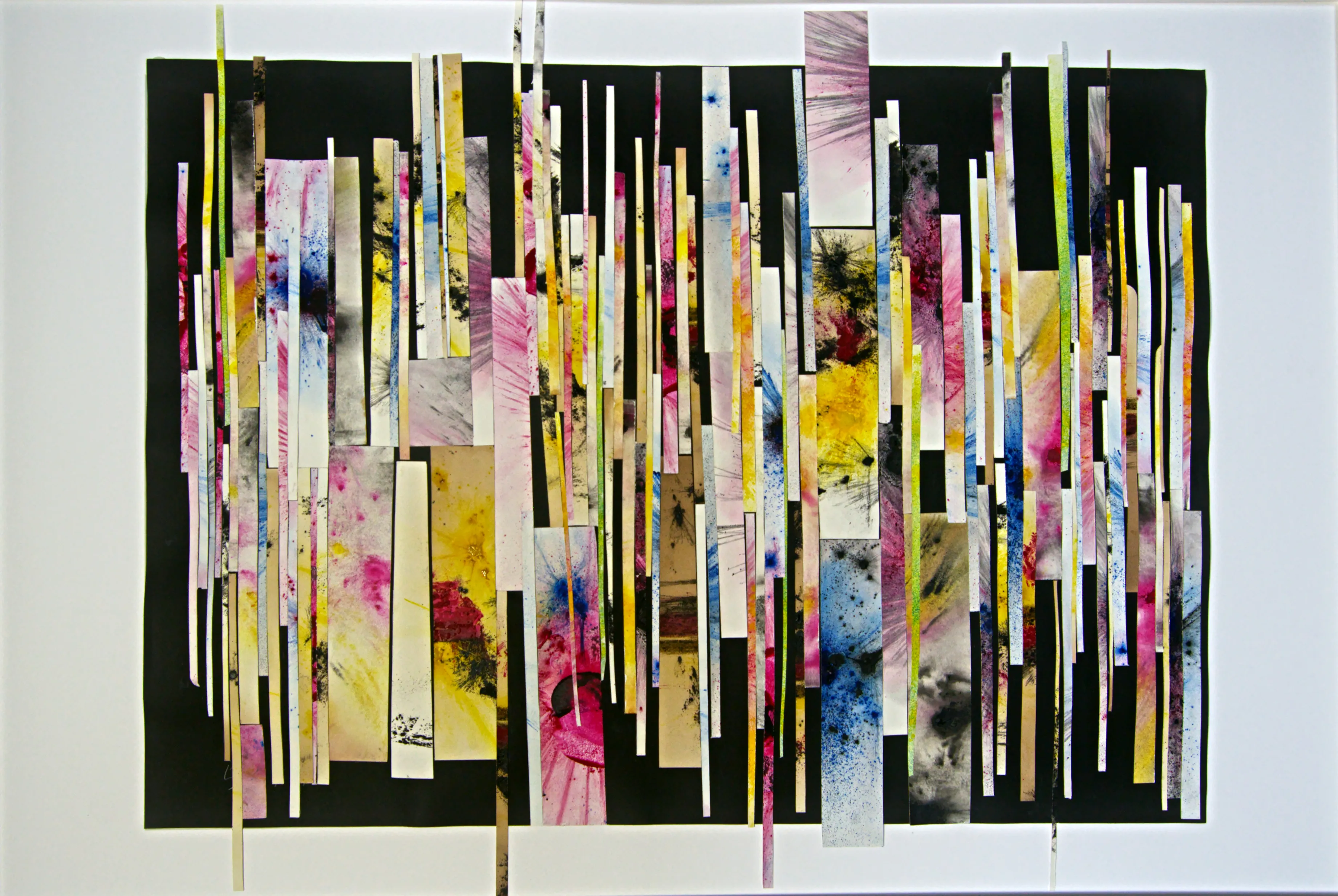
The next piece did the opposite. I wanted black, movement, music, the feeling of letting go and refusing to make something perfect when I am nowhere near it. So I stopped cutting squares and cut whatever the blade wanted, formless scraps glued however I liked. I meant to make the Venezuelan flag, which was easy and boring, and the process would not let me. I was composing horizontally and turned it vertical near the end, and the flag dissolved into something else: the gold of a Klimt reproduction that hung in the kitchen of a childhood friend's mother, the obelisk of Plaza Altamira, the kinetic art of Caracas across the sixties, seventies, eighties, the colours and the rhythm of the city. That one is glued to the cardboard of a television box.
The toner is the same material as Cosmopolitical City, the CMYK of media reproduction. When the paper overheats in the oven the colour shifts, browns, darkens. That belongs to the piece. What changed is the subject, Caracas and the diaspora, and the ground: the cardboard that packaged the screens through which people far from home keep living in a country that is no longer there.
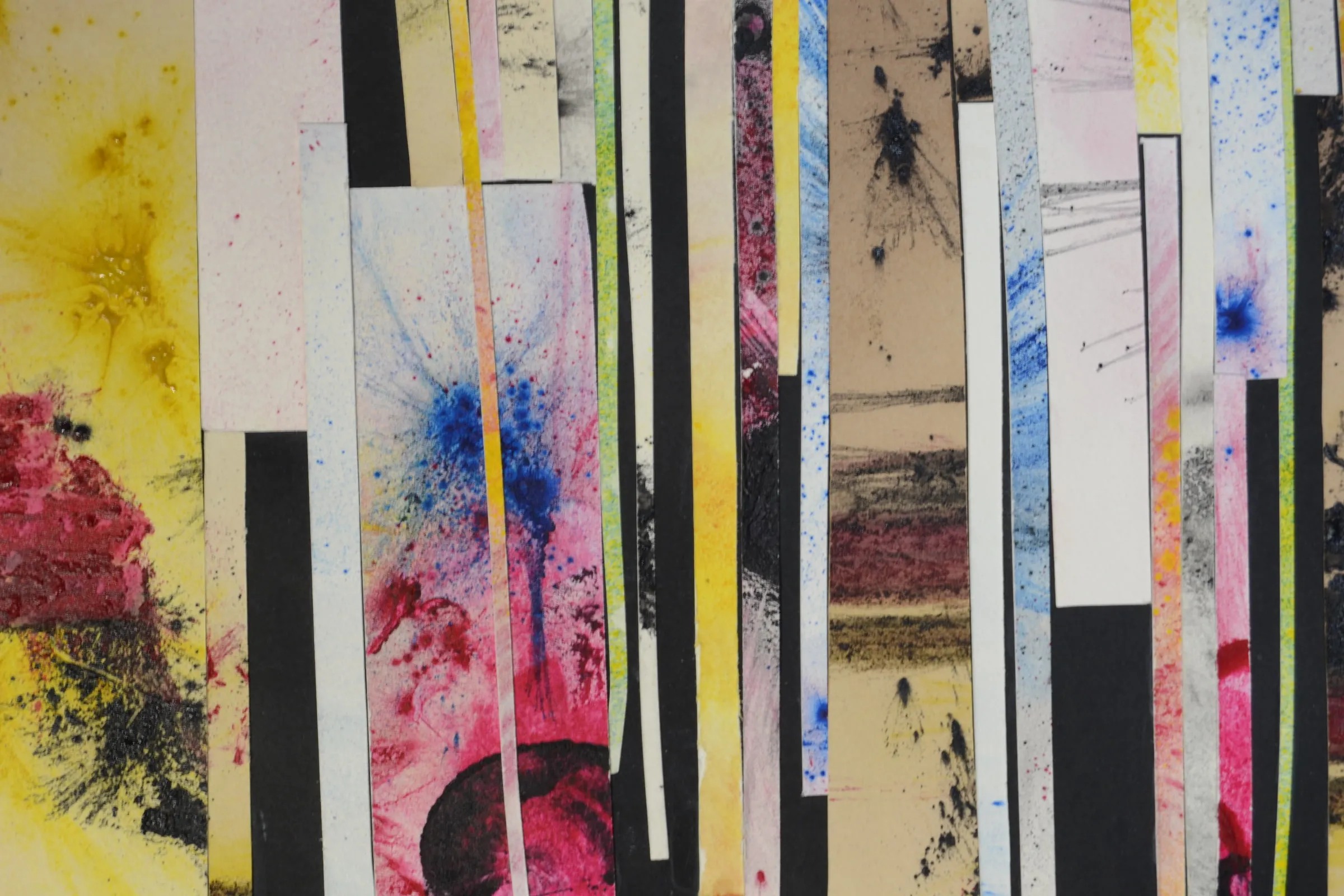
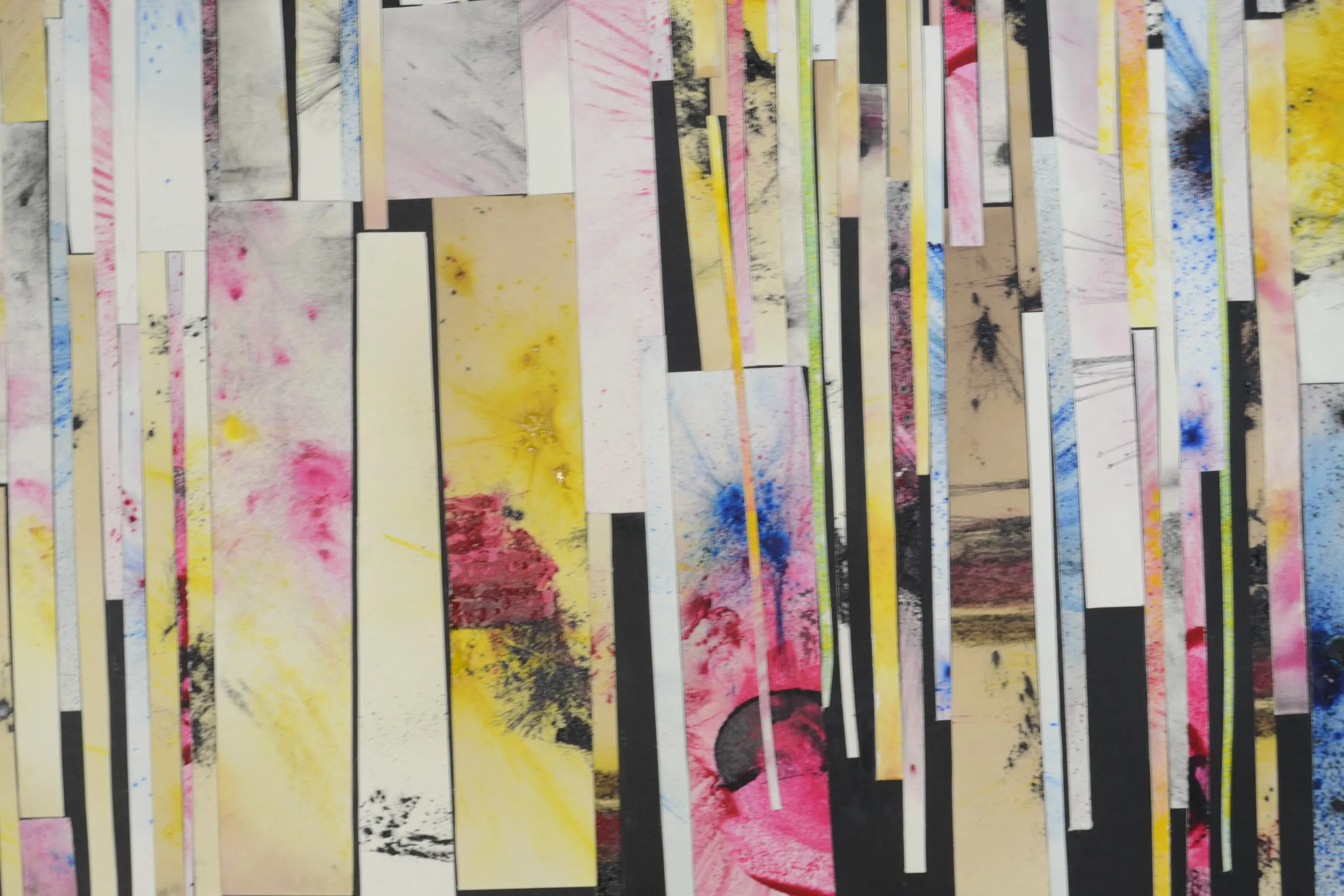
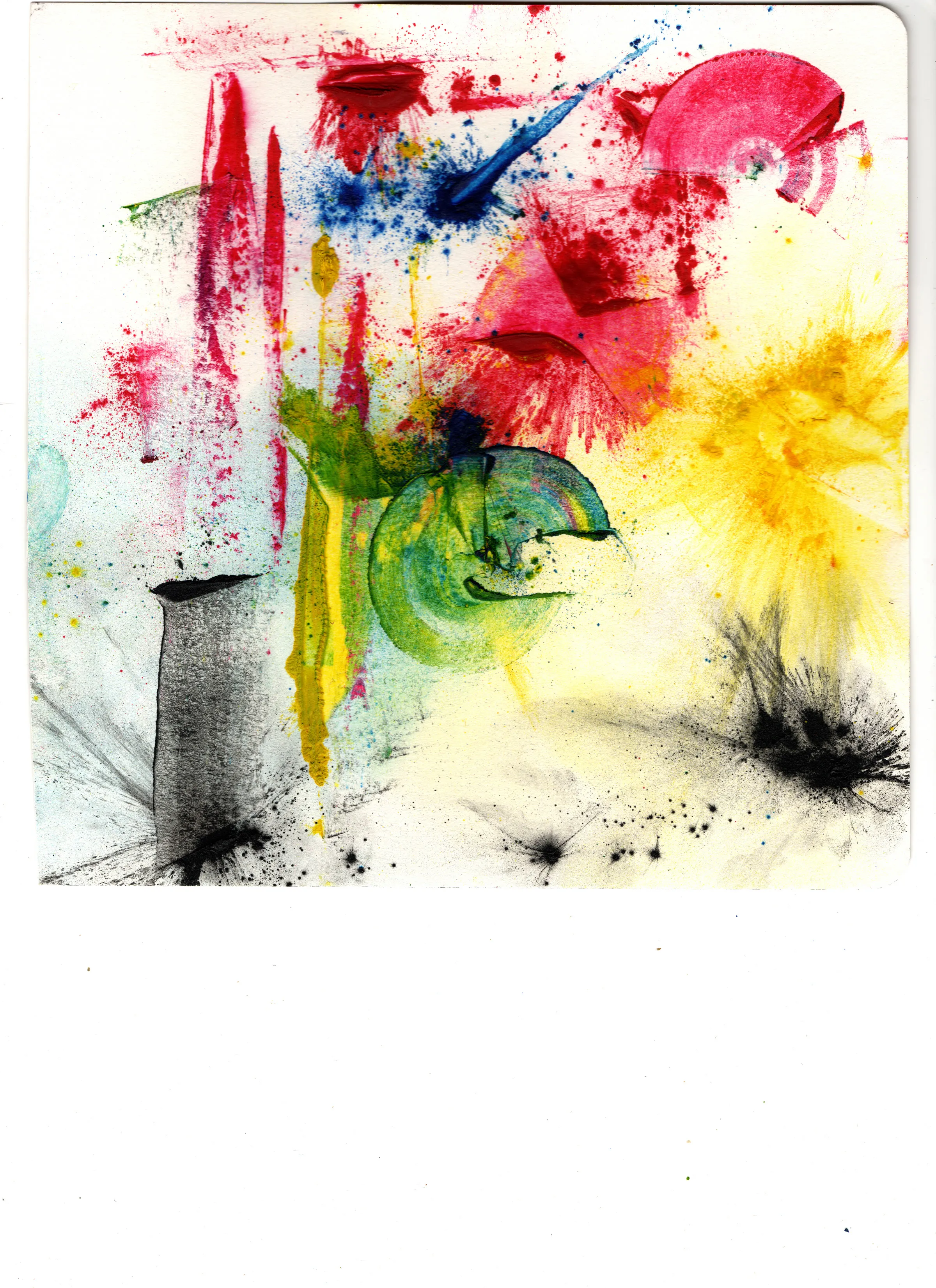
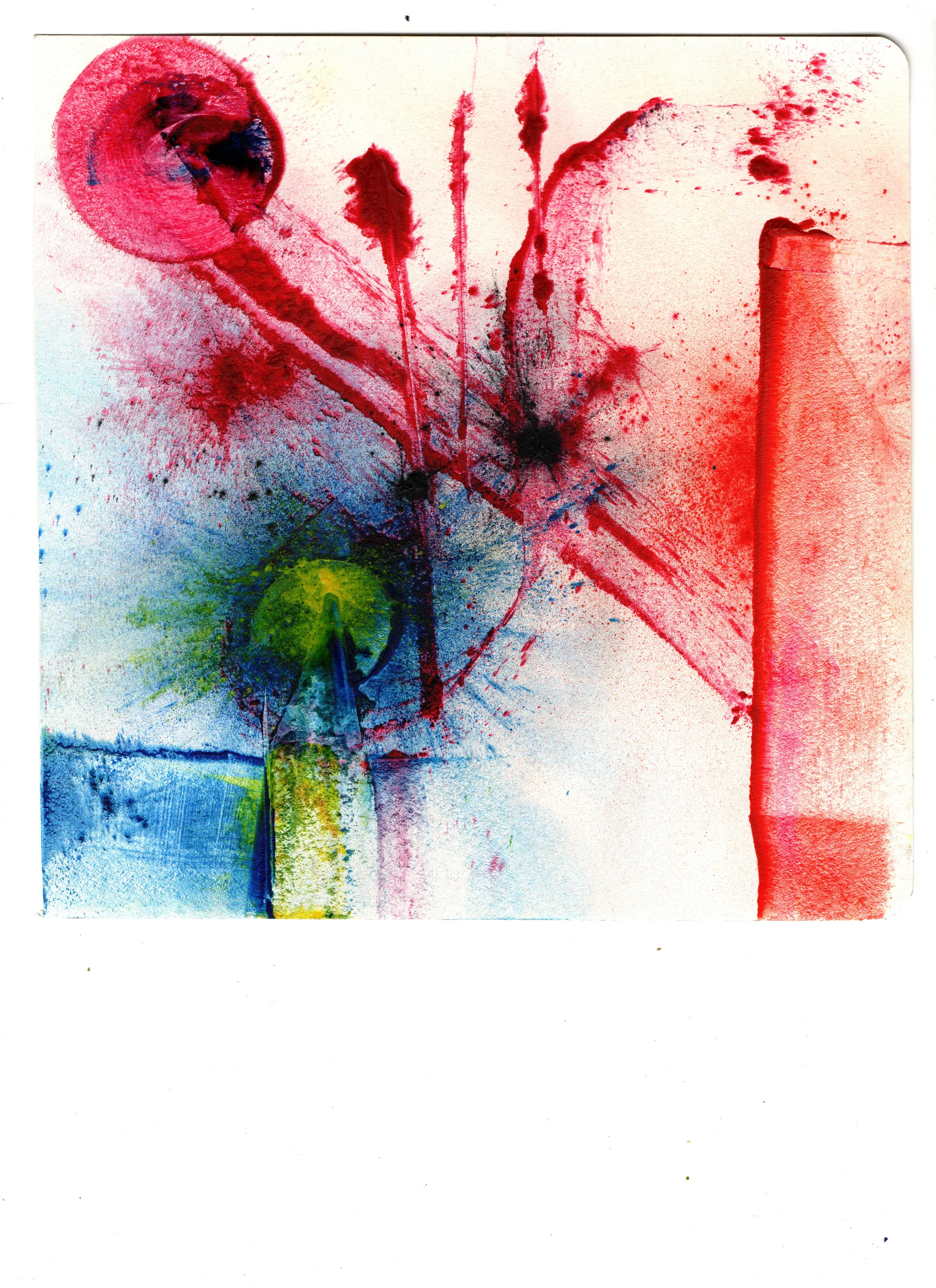
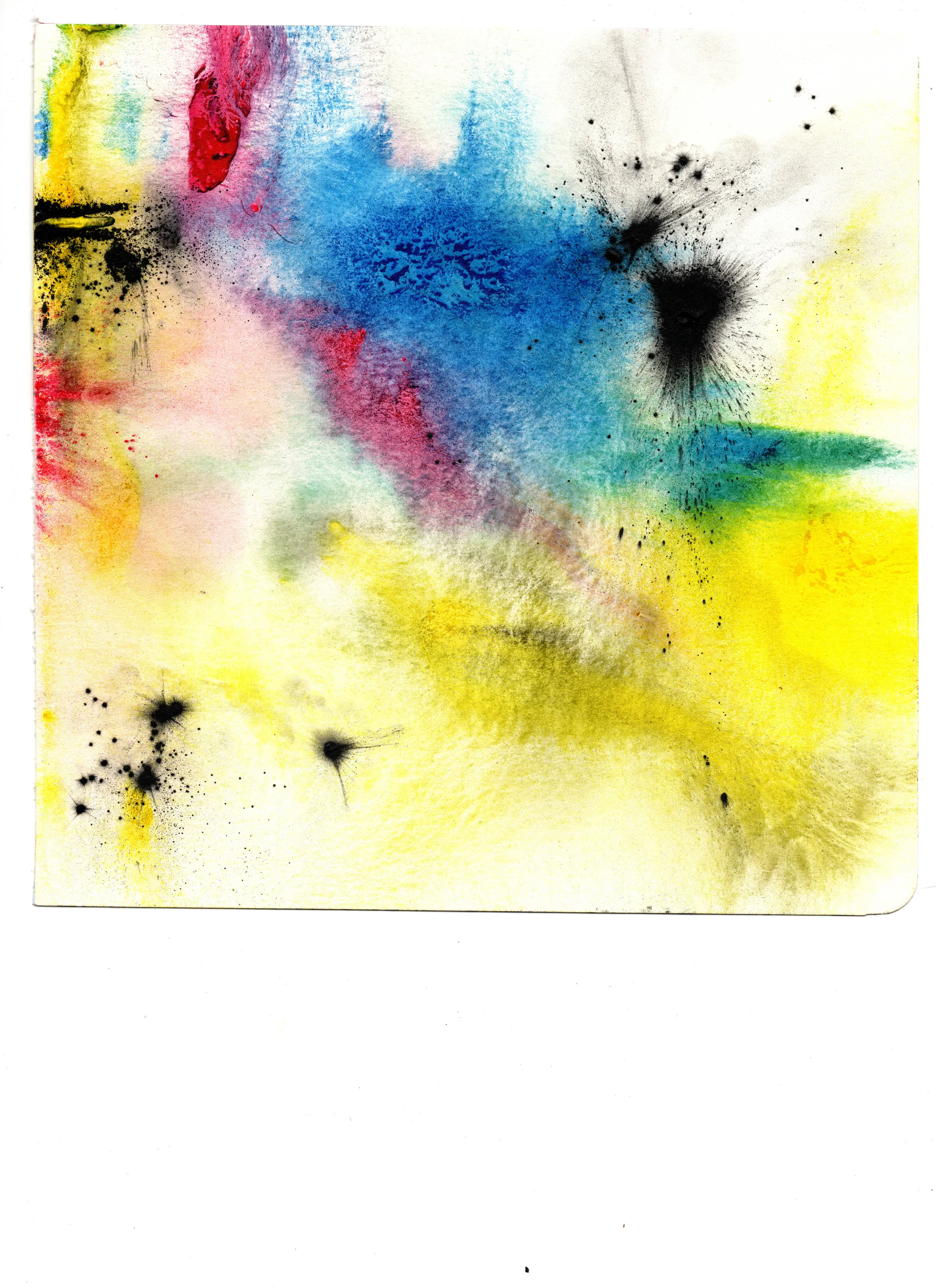
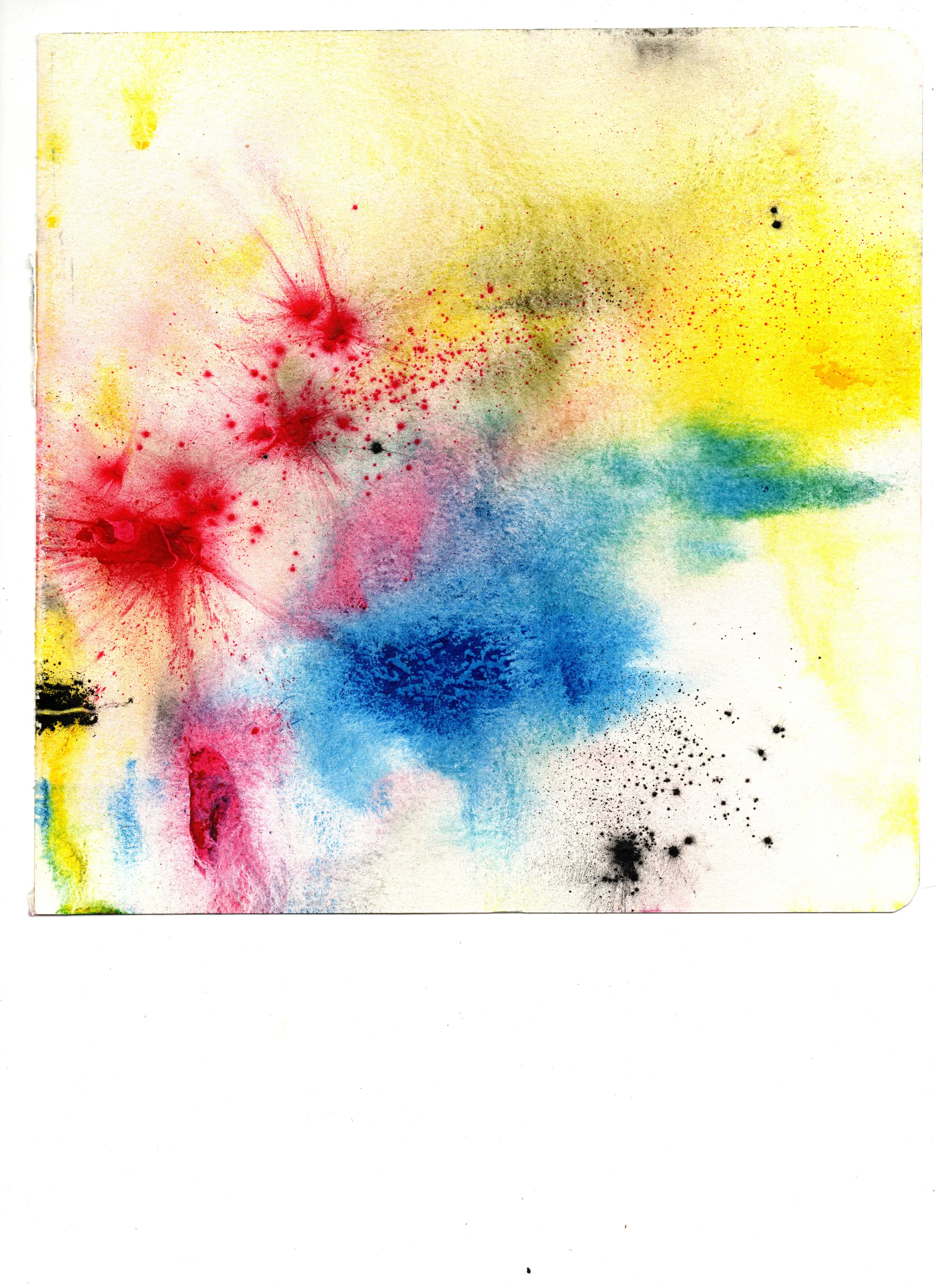
Later pieces carry the method further. In the framed vertical works on black, the fragments keep their density and their differences, and they begin to connect with a logic the earlier pieces would not allow. What I am after there is movement. Read left to right, the rhythm does not begin at the edge: a small black space opens first, then the incidents arrive, large and small, and set the tempo. And Caracas Nocturna, a subseries of square toner studies I meant to cut up and could not, because I liked them whole. Ten so far. The series stays open.